
Compliance Template
Employee Monitoring Data Retention Policy Template: Jurisdiction-Aware Retention Schedules
Employee monitoring data retention policy is one of the most frequently neglected compliance obligations in workforce monitoring programs. Get it wrong in one direction and you violate GDPR's storage limitation principle. Get it wrong in the other and you delete records you need for legal defense, SOX audits, or FLSA compliance. This template and accompanying retention schedules give you a ready-to-customize framework for every major jurisdiction where employees may be located.
Why Employee Monitoring Data Retention Is a Legal Risk, Not Just a Storage Decision
Employee monitoring data retention policy is a legal obligation with consequences at both ends of the retention spectrum. Retaining monitoring data longer than legally permitted exposes organizations to regulatory enforcement under GDPR, the UK Data Protection Act 2018, and similar frameworks worldwide. Deleting monitoring data too quickly removes the evidence trail needed for employment disputes, regulatory audits, and, in regulated industries, financial record-keeping requirements.
The UK Information Commissioner's Office (ICO) issued enforcement notices against three organizations in 2024 for retaining employee monitoring data "significantly beyond operationally necessary periods." In each case, the ICO cited GDPR Article 5(1)(e), the storage limitation principle, as the violated provision. The fines ranged from £50,000 to £250,000, and each organization was required to implement a formal retention schedule as a remedial action.
In the United States, the opposing risk is more common: organizations that delete time and attendance records before the FLSA's three-year retention window inadvertently destroy evidence needed to defend wage and hour claims. The Department of Labor's Wage and Hour Division collected $274 million in back wages from employers in fiscal year 2024, and inadequate record retention was a contributing factor in over 30% of successful enforcement actions.
The employee monitoring data retention policy template in this guide resolves both risks by assigning retention periods that satisfy the minimum legal requirement while respecting the maximum permitted period in each jurisdiction.
For the broader governance framework that this retention policy sits within, see the employee monitoring data governance guide.
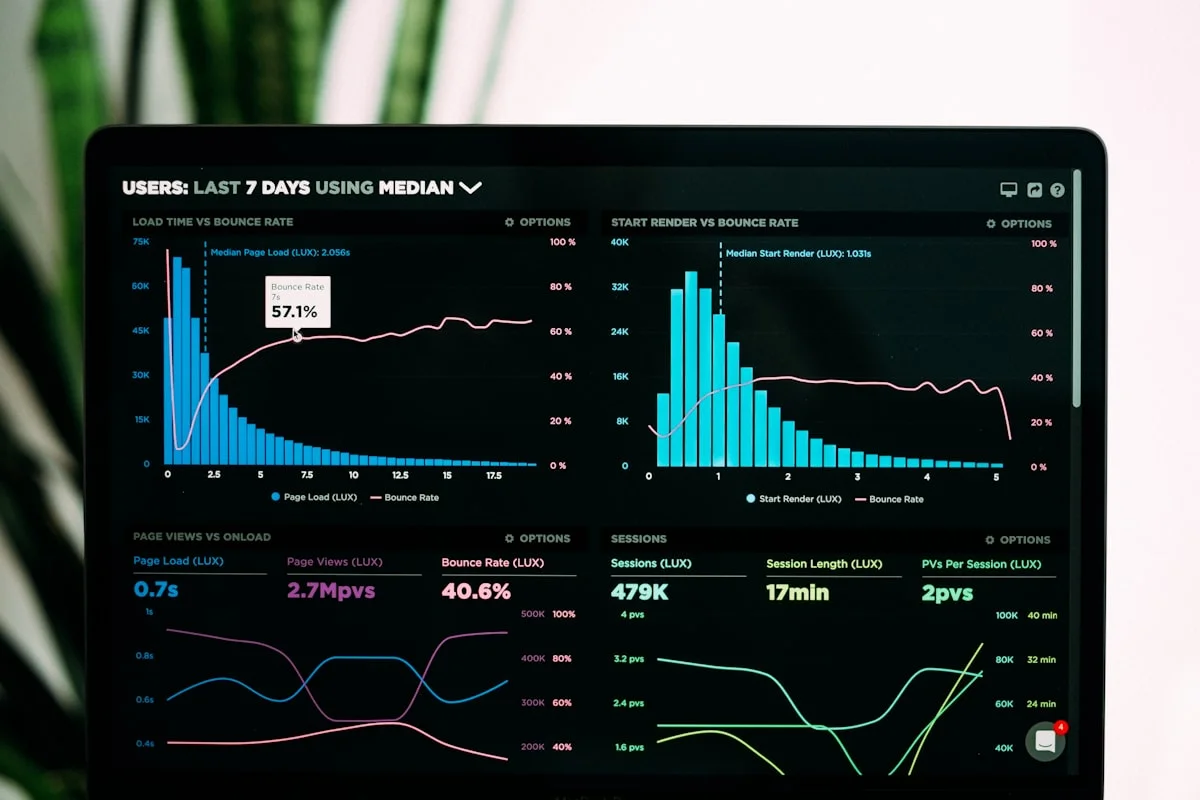
Employee Monitoring Data Categories and Retention Considerations
Employee monitoring generates multiple distinct categories of data, each with different retention obligations. Treating all monitoring data as a single category and applying a single retention period is incorrect and will either under-retain required records or over-retain protected personal data. Define retention periods at the data category level.
Category 1: Time and Attendance Records
Time and attendance records include clock-in and clock-out timestamps, work hours by day and pay period, break durations, and overtime calculations. These records exist at the intersection of employee monitoring and payroll, they are both monitoring data and employment records. The FLSA (US) requires employers to retain payroll records for at least three years. State wage laws in California, New York, and Massachusetts extend this to four years. UK employment law requires payroll records for six years to align with the statute of limitations for contractual claims.
Category 2: Productivity and Activity Logs
Productivity and activity logs include application usage records, website visit histories, active and idle time data, and productivity scores. These records have no specific regulatory retention requirement in most jurisdictions, but they are subject to GDPR's storage limitation principle in the EU and UK. A defensible retention period for operational monitoring data (activity logs used for performance management) is 90 days to 12 months. Activity logs with investigation relevance may be placed on legal hold for longer retention under legitimate interest grounds.
Category 3: Screenshots and Screen Recordings
Screenshots and screen recordings are the most sensitive monitoring data category. They may contain personal correspondence, health information, financial data, or other categories of special data under GDPR Article 9. The retention period for screenshots and screen recordings should be the shortest defensible period: 30 to 90 days for routine monitoring captures, with exception-based retention (legal hold, investigation preservation) extending beyond that only when specifically required. The ICO's Employment Practices Code recommends that screenshot data be "retained no longer than is necessary for the purpose for which it was captured."
Category 4: DLP Violation Records
DLP (Data Loss Prevention) violation records document unauthorized USB usage, web access violations, and unauthorized file operations. These records have dual purpose: operational (investigate and respond to violations) and legal (document policy violations in employment proceedings). DLP violation records are typically retained for 12 to 24 months for operational purposes, extending to 36 months or longer if related to employment disputes or criminal investigations.
Category 5: Security and Access Logs
Security and access logs include login/logout events, failed authentication attempts, system access records, and anomaly detection alerts. These records intersect with cybersecurity compliance requirements. PCI DSS v4.0 Requirement 10.5.1 requires 12-month retention for audit logs, with the most recent 3 months available for immediate analysis. NIST SP 800-171 and CMMC requirements for AU control family compliance also specify audit log retention sufficient to support incident investigation. A standard retention period of 12 to 24 months satisfies most cybersecurity framework requirements.
Category 6: Investigation Records
Investigation records are monitoring data artifacts created in connection with a specific workplace investigation, disciplinary proceeding, or legal claim. These records are governed by legal hold requirements and must be retained for the duration of the relevant proceeding plus the applicable statute of limitations. Legal hold supersedes any standard retention schedule: an automated deletion process must be capable of excluding records subject to legal hold from scheduled purges. For a comprehensive treatment of litigation hold obligations for monitoring data, see our dedicated guide covering triggering events, spoliation risk, and implementation steps.
Jurisdiction-Specific Retention Schedules
Employee monitoring data retention schedules must be built jurisdiction by jurisdiction, because the applicable legal minimum and maximum retention periods vary significantly by location. The schedules below identify the controlling legal requirement, the recommended retention period by data category, and the deletion trigger for each jurisdiction.
European Union: GDPR Article 5(e) Retention Schedule
| Data Category | Legal Basis | Recommended Retention | Maximum Permitted | Deletion Trigger |
|---|---|---|---|---|
| Time and attendance records | Legal obligation (labor law) / Legitimate interest | 6 years | 6 years from record date | 6 years after the relevant pay period |
| Productivity and activity logs | Legitimate interest (performance management) | 90 days | 12 months (with documented justification) | 90 days after capture, unless legal hold applies |
| Screenshots and screen recordings | Legitimate interest (specific investigation basis) | 30 days | 90 days (routine); unlimited (under legal hold) | 30 days after capture; legal hold overrides |
| DLP violation records | Legitimate interest (security / HR proceedings) | 12 months | 36 months | 12 months after violation, or investigation conclusion |
| Security and access logs | Legal obligation (NIS2 Directive) / Legitimate interest | 12 months | 24 months | 12 months after log entry date |
| Investigation records | Legitimate interest (legal claims defense) | Duration of proceedings + 2 years | Duration of proceedings + limitation period | Conclusion of all related legal proceedings |
GDPR Article 5(1)(e) requires that personal data be "kept in a form which permits identification of data subjects for no longer than is necessary for the purposes for which the personal data are processed." Organizations must document the specific purpose and legal basis for each retention period in their Record of Processing Activities (RoPA) under GDPR Article 30.
United Kingdom: UK GDPR Post-Brexit Retention Schedule
UK GDPR mirrors EU GDPR in its storage limitation requirements, but employment law retention obligations differ. The UK Limitation Act 1980 sets a 6-year limitation period for contract claims, creating a 6-year retention standard for employment records. The UK Employment Rights Act requires payroll records for 3 years. The ICO's employment practices guidance recommends that monitoring data retention periods be reviewed annually and that any period exceeding 6 months for activity logs requires documented justification reviewed by the Data Protection Officer. Post-Brexit, the UK adequacy decision enables unrestricted EU-UK data transfers, but organizations with employees in both the EU and UK must comply with the retention standards of both jurisdictions for the relevant employee populations.
United States: Federal and State Retention Requirements
| Applicable Law | Record Type | Retention Requirement | eMonitor Data Category |
|---|---|---|---|
| FLSA (29 CFR Part 516) | Payroll records, work schedules, time records | 3 years | Time and attendance records |
| SOX Section 802 (18 USC 1519) | Financial records, audit workpapers, supporting documentation | 7 years | Activity logs supporting financial controls; access logs for financial systems |
| PCI DSS v4.0 (Req. 10.5.1) | Audit logs (cardholder data environment) | 12 months (3 months immediately accessible) | Security and access logs for systems in the CDE |
| HIPAA (45 CFR 164.530(j)) | HIPAA policies, documentation, workforce training records | 6 years | Activity logs for systems accessing PHI |
| EEOC regulations (29 CFR Part 1602) | Employment records relevant to discrimination claims | 1 year (3 years for government contractors) | Productivity and activity records with personnel decision relevance |
| NLRA record-keeping guidance | Records relevant to unfair labor practice charges | Duration of proceeding + 1 year | Activity records subject to union or NLRB dispute |
US federal requirements establish floors, not ceilings. State laws in California (CCPA / Privacy Rights Act), Colorado (CPA), Connecticut (CTDPA), Virginia (VCDPA), and New York (forthcoming NY SHIELD amendments) impose additional data minimization requirements that affect retention. California employees have the right to request deletion of their personal data, which creates tension with FLSA retention obligations. When these obligations conflict, seek legal counsel for jurisdiction-specific resolution.
Australia: Privacy Act APP 11 Schedule
Australia's Privacy Act 1988 (as amended by the Privacy and Other Legislation Amendment Act 2024) requires organizations to retain personal information only as long as required for its purpose or as required by law. The Fair Work Act 2009 requires employee records to be retained for 7 years from the date of creation, covering pay, leave, hours of work, and employment terms. Employee monitoring records used for performance management or attendance purposes fall within the Fair Work Act's retention requirement. Screenshots and screen recording data not directly tied to employment record purposes should follow the shorter "no longer than necessary" standard.
Employee Monitoring Data Retention Policy: Customizable Template
The following policy template provides a ready-to-adapt framework for organizations implementing a formal employee monitoring data retention policy. Customize the bracketed fields for your organization's specific details. Have legal counsel review before implementation, particularly the legal basis statements for GDPR jurisdictions.
EMPLOYEE MONITORING DATA RETENTION POLICY
Policy Owner: [Data Protection Officer / Legal / HR]
Effective Date: [Date]
Review Date: [Annual review date]
Version: 1.0
1. Purpose
This policy establishes the retention periods and deletion procedures for all data generated by [Organization Name]'s employee monitoring program. Employee monitoring data is personal data (in jurisdictions with applicable data protection law) and must be retained for the minimum period required by applicable law while not being retained beyond the maximum period permitted.
2. Scope
This policy applies to all employee monitoring data generated by [eMonitor / monitoring platform name] across all [Organization Name] employees, contractors, and consultants in all jurisdictions where the organization operates. Monitoring data includes: time and attendance records, productivity and activity logs, screenshots and screen recordings, DLP violation records, security and access logs, and investigation records.
3. Retention Schedules by Jurisdiction
Retention periods are assigned by data category and jurisdiction as specified in the Retention Schedule Appendix attached to this policy. Where an employee is subject to the laws of multiple jurisdictions, the longer retention period applies. Where retention obligations conflict with data subject deletion rights, the organization's legal counsel will determine the applicable priority.
4. Legal Hold
All standard retention schedules are suspended for data subject to a legal hold. A legal hold is triggered by: receipt of a litigation hold notice, initiation of a formal investigation, receipt of a regulatory inquiry, or reasonable anticipation of legal proceedings. The [Legal / HR] department is responsible for identifying and communicating legal hold requirements to the monitoring platform administrator. Legal holds remain in effect until the [Legal] department issues a formal hold release.
5. Deletion Procedures
Data scheduled for deletion under this policy is deleted through [eMonitor's automated retention management / manual deletion process]. Deletion means permanent removal from active storage. Backup copies containing monitoring data are purged within [30/60/90] days of the scheduled deletion date for active records. The monitoring platform administrator maintains a deletion log confirming execution of scheduled deletions.
6. Data Subject Rights
Data subjects in GDPR-regulated jurisdictions have the right to request access to their monitoring data (Article 15), correction of inaccurate data (Article 16), and deletion of data that is no longer necessary (Article 17). Deletion requests are processed by the [Data Protection Officer] within 30 days of receipt, subject to legal hold requirements and legal obligation retention minimums.
7. Annual Review
This policy and the attached Retention Schedule Appendix are reviewed annually by the [Data Protection Officer / Legal] team. Reviews incorporate changes to applicable law, changes to monitoring platform capabilities, and changes to the organization's jurisdictional footprint.
The employee offboarding data retention guide covers the specific retention decisions required when an employee leaves the organization, including legal hold triggers and the post-departure retention window.
Implementing the Retention Policy in eMonitor
A monitoring data retention policy is only effective if the monitoring platform enforces it automatically. Manual deletion processes are error-prone and frequently fail during busy periods, creating compliance gaps that accumulate over time. eMonitor supports configurable data retention settings that automate the deletion of monitoring data according to your policy schedules.
Within eMonitor's administration settings, data retention periods are configurable by data category. Screenshot data, activity logs, and DLP violation records each have independent retention configuration. Administrators set the retention period in days for each data category, and eMonitor automatically removes data that exceeds the configured period. Records subject to active legal hold are excluded from automated deletion processes when flagged by administrators.
eMonitor's role-based access controls support the data minimization principle by restricting access to older monitoring records to authorized personnel only. Activity data from the previous 30 days is accessible to managers by default; older data requires elevated permissions for access, creating a natural data minimization layer that complements the formal retention schedule.
When an employee is offboarded, eMonitor's administrator tools allow monitoring data to be flagged for post-departure retention review. Data subject to the standard post-departure retention window (typically 12 to 24 months for employment claim defense purposes) is retained in a restricted-access archive until the retention period expires or a legal hold release is issued.
For a comprehensive view of GDPR data minimization principles applicable to your monitoring program, see our compliance guide covering Articles 5, 6, 9, 13, and 88 in full detail. Organizations establishing access controls alongside their retention policy should also review our guide to role-based access controls for monitoring data.
Frequently Asked Questions
How long should employee monitoring data be retained?
Employee monitoring data retention periods depend on data category and jurisdiction. Under GDPR, activity logs are typically retained for 90 days to 12 months based on the storage limitation principle. US organizations follow FLSA's 3-year minimum for time records and SOX's 7-year minimum for financial records. Screenshots should be retained no longer than 30 to 90 days for routine monitoring. A formal retention schedule specifying periods by data type and jurisdiction is the only defensible approach, a single blanket period for all monitoring data is insufficient.
What does GDPR Article 5(e) require for monitoring data retention?
GDPR Article 5(1)(e) requires that personal data be kept no longer than necessary for the purposes for which it was collected. For employee monitoring data, this means retention periods must be justified by a specific documented purpose: performance management, compliance audit, legal defense, or operational security. Typical GDPR-compliant retention periods range from 30 days (screenshots) to 24 months (time records with labor law basis). Organizations must document each period in their Record of Processing Activities and review periods annually.
Does SOX or PCI DSS require specific monitoring log retention periods?
SOX Section 802 requires 7-year retention for financial records and supporting documentation, which includes activity logs for systems accessing financial data. PCI DSS v4.0 Requirement 10.5.1 requires 12-month retention for audit logs in cardholder data environments, with the most recent 3 months immediately accessible. Organizations subject to both frameworks should apply the longer 7-year SOX retention to any monitoring records potentially supporting financial controls, and separately maintain a 12-month immediately accessible archive for PCI DSS audit log requirements.
How do you create a monitoring data retention schedule?
Creating a monitoring data retention schedule requires four steps: categorize monitoring data by type (time records, activity logs, screenshots, DLP violations, access logs); identify the legal jurisdiction for each employee population; assign retention periods based on the applicable regulatory minimum (FLSA, SOX, GDPR, local labor law) as the floor and the minimum necessary period as the ceiling; then document legal bases in your Record of Processing Activities. Configure automated deletion in your monitoring platform and review the schedule annually for regulatory changes.
What happens to monitoring data when an employee leaves?
When an employee leaves, monitoring data continues under the standard retention schedule but triggers a legal hold review. Any pending or reasonably anticipated legal claims require placing the departing employee's monitoring data on legal hold before scheduled deletion occurs. The standard post-departure retention window for employment claim defense is 12 to 24 months, matching the limitation period for unfair dismissal and discrimination claims in most jurisdictions. After this window, monitoring data is deleted unless subject to an active legal hold or longer statutory retention requirement.
Can employees request deletion of their monitoring data under GDPR?
GDPR Article 17 grants data subjects the right to erasure when data is no longer necessary for the purpose it was collected, when consent is withdrawn (if consent was the legal basis), or when the data has been unlawfully processed. For employee monitoring data, the right to erasure is balanced against legal obligations, organizations can refuse deletion requests when data must be retained to comply with legal obligations (FLSA, SOX) or to establish, exercise, or defend legal claims. Document each refusal with the specific legal basis.
How does the UK GDPR differ from EU GDPR for monitoring data retention?
UK GDPR applies the same storage limitation principle as EU GDPR (Article 5(1)(e)), requiring data to be kept no longer than necessary. The primary difference lies in employment law retention obligations: UK contract claims have a 6-year limitation period under the Limitation Act 1980, compared to varying EU member state periods. UK organizations must also comply with the ICO's Employment Practices Code, which recommends annual review of monitoring data retention schedules and DPO approval for any retention period exceeding 6 months for activity logs.
What is a legal hold and when does it apply to monitoring data?
A legal hold (also called a litigation hold or preservation notice) is a directive suspending routine data deletion for records relevant to actual or anticipated legal proceedings. Legal holds apply to monitoring data when an organization receives formal legal action, a regulatory inquiry, an employee grievance that may escalate to litigation, or when legal counsel identifies a reasonable anticipation of legal claims. Legal holds override all standard retention schedule deletions. Failure to preserve relevant monitoring data after a legal hold should have been triggered constitutes spoliation, which courts may treat as evidence destruction.
Related Resources
Employee Monitoring Data Governance Guide
The broader governance framework covering data classification, access policy, and processing documentation.
Read the guide →Offboarding Data Retention Guide
Specific retention decisions required when employees leave, including legal hold triggers and post-departure windows.
Read the guide →GDPR Employee Monitoring Compliance
Full coverage of GDPR Articles 5, 6, 9, 13, and 88 for employee monitoring programs.
Read the guide →