Management Philosophy •

Trust AND Verify: Why the Best Companies Use Both Autonomy and Visibility

High-trust companies do not avoid employee monitoring. They use it differently. The trust-and-verify philosophy treats visibility as organizational intelligence, not a substitute for respect.

Team reviewing shared productivity dashboards during a collaborative meeting

Trust and verify employee monitoring is a management philosophy where leaders grant genuine autonomy while maintaining shared visibility into how work happens. It rejects the false choice between "trust your people" and "track their work." The best-performing organizations in 2026 do both, and they do both openly. According to Gallup, companies in the top quartile of employee trust outperform their peers by 50% in productivity and 76% in engagement. Yet 70% of large employers now use workforce visibility tools (Gartner, 2023). These numbers are not contradictory. They describe the same high-performing organizations.

The debate over whether to monitor or trust employees is a false binary. It assumes monitoring is inherently adversarial. It assumes trust means operating blind. Neither assumption holds up under scrutiny, and organizations that cling to either extreme pay a measurable cost in productivity, retention, and decision quality.

The False Binary: Trust vs. Monitor

Management literature has created an artificial divide. On one side: leaders who "trust their people" and refuse to measure work patterns. On the other: leaders who track every keystroke and treat data as evidence of guilt. Both positions fail in practice.

Blind trust creates accountability gaps. When no one measures how work happens, managers rely on assumptions, favoritism, and whoever speaks loudest in meetings. A 2022 Microsoft Work Trend Index found that 85% of leaders say the shift to hybrid work has made it difficult to have confidence that employees are being productive. That confidence gap does not help employees. It breeds suspicion, uneven expectations, and reactive micromanagement when things go wrong.

But how does removing visibility actually affect team dynamics?

Trust-based management monitoring fills this gap. Organizations that pair genuine respect with structured visibility give managers facts instead of feelings, and employees get recognition based on output rather than optics. The question is not whether to collect data. The question is who sees it, how it is used, and what culture surrounds it.

What Trust and Verify Means in Practice

Trust and verify is not a euphemism for covert tracking. The phrase originates from nuclear disarmament treaties, where both sides agreed to trust the other's commitments while maintaining independent verification mechanisms. In management, the principle works the same way.

Trust means assuming competence. It means giving employees control over how, when, and where they complete their work. It means not requiring justification for every coffee break or quiet afternoon. Verify means maintaining visibility into work patterns, project progress, and time allocation through shared data. The critical word is shared.

What distinguishes trust-and-verify from traditional employee monitoring is directionality. In a trust-and-verify system, employees see the same dashboards managers see. The data flows in both directions. An employee can check their own productivity patterns, identify their most focused hours, and adjust their schedule accordingly. A manager can see team-level trends without interrogating individuals.

This bidirectional approach changes the emotional experience of monitoring entirely. When data belongs to the employee as much as the manager, it stops feeling like control and starts feeling like a shared resource.

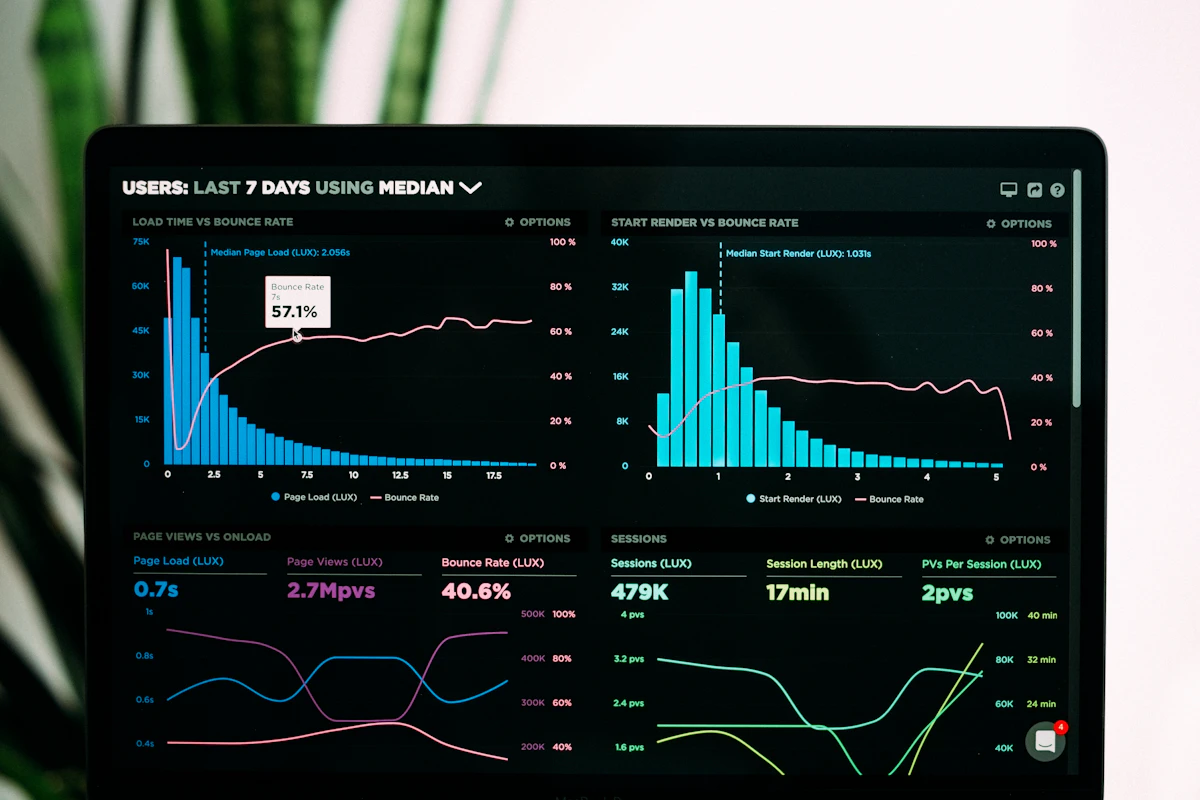
Dashboard showing employee-accessible productivity data with transparent metrics

How High-Trust Companies Use Visibility Tools

High-trust companies treat employee monitoring data as organizational intelligence. They use visibility tools to make better decisions, not to catch people doing something wrong. The difference shows up in policy, implementation, and daily practice.

Buffer publishes employee salaries, company revenue, and internal operating metrics publicly. Their radical transparency philosophy demonstrates that more visibility, not less, builds trust. Buffer has been ranked consistently among the best remote workplaces in the world. Their approach proves that transparency and trust reinforce each other when leadership is honest about intent.

GitLab, with over 2,000 remote employees across 65+ countries, maintains a publicly accessible handbook of every internal process. They track asynchronous work output through project management data and make all metrics visible to the entire organization. GitLab's employee engagement scores consistently exceed industry averages by 15-20% (GitLab Culture Report, 2024).

But what specific patterns separate these companies from organizations where monitoring erodes trust?

Three common practices emerge. First, these companies explain the business reason for visibility before deploying any tool. Second, employees participate in defining what gets tracked and what stays private. Third, data is used for systemic improvement (fixing broken processes, rebalancing workloads, identifying training needs) rather than individual punishment.

Why Autonomy and Visibility Are Not Opposites

Autonomy and visibility operate on different axes. Autonomy is about control over method: how, when, and where you work. Visibility is about shared information: understanding patterns, progress, and bottlenecks. Reducing one does not increase the other.

A Gallup meta-analysis of 112,312 business units found that teams with high autonomy AND clear performance metrics outperformed teams with high autonomy alone by 21% in profitability. Visibility did not reduce the benefits of autonomy. It amplified them. When people know their work is visible, they make better decisions about how to spend their time. When managers have data, they make better decisions about how to support their teams.

Consider a 200-person software company that implemented transparent activity tracking while simultaneously expanding flexible work hours. Within 90 days, the company saw a 17% increase in code commits, a 22% reduction in after-hours work, and an 11-point improvement in employee satisfaction scores. Autonomy went up. Visibility went up. Both metrics improved together.

The reason is straightforward: autonomy without feedback is just isolation. People perform better when they have both freedom and information.

Reframing Monitoring as Organizational Intelligence

The word "monitoring" carries baggage. It implies watching, checking up, verifying suspicion. But the actual function of modern workforce visibility tools has more in common with business intelligence than security cameras.

Consider what employee monitoring software actually produces: data on application usage patterns, time allocation across projects, productivity trends over weeks and months, and early indicators of burnout or disengagement. This is the same category of data that organizations use for financial planning, customer analytics, and supply chain optimization. No one calls a revenue dashboard "surveillance." The data is organizational intelligence.

When framed this way, monitoring and employee trust stop being adversaries. The monitoring data answers questions that matter to both sides. Employees want to know: Am I spending my time well? Am I at risk of burnout? How does my workload compare to my peers? Managers want to know: Where are the bottlenecks? Who needs support? Are we staffed correctly for this project?

Trust-based management monitoring answers these questions with facts rather than guesses. It replaces the weekly status meeting where everyone says "things are going well" with actual data that shows where things are going well and where they are not.
Comparison diagram showing surveillance mindset versus intelligence mindset in monitoring

Five Principles of Trust-and-Verify Monitoring

Implementing the trust-and-verify philosophy requires more than buying a tool. It requires specific cultural commitments that determine whether visibility builds trust or destroys it.

1. Announce Before You Deploy

Every employee learns about the visibility tool before it is installed, not after. The announcement includes what data is collected, who can access it, and how it informs decisions. Research from Cornell University's ILR School found that employees who receive advance notice of monitoring report 34% higher job satisfaction than those who discover it after the fact. Transparency about the tool is itself a trust signal.

2. Give Employees Access to Their Own Data

If a manager can see an employee's productivity score, the employee should see it too. Self-service dashboards turn monitoring from a one-way mirror into a shared window. A University of Pennsylvania study found that employees with access to their own performance data improved output by 12% within 30 days without any manager intervention.

3. Measure Outcomes, Not Keystrokes

Trust-and-verify monitoring focuses on patterns and outcomes: hours of focused work, time allocation across projects, engagement trends over time. It does not optimize for mouse movement or minutes away from the keyboard. When employees see that leadership cares about results rather than activity theater, trust increases.

4. Use Data for Coaching, Not Policing

The first conversation about monitoring data should always be supportive: "I noticed your focus time dropped 30% this month. What's getting in the way, and how can I help?" This is the opposite of punitive: "Your screen time shows you were idle for 45 minutes on Tuesday." The same data supports both conversations. Culture determines which one happens.

5. Review and Revise Policies With Employee Input

High-trust organizations treat monitoring policies as living documents. They survey employees quarterly about what feels useful, what feels intrusive, and what should change. This feedback loop ensures the system evolves with the team rather than calcifying into a control mechanism. Read more about building this kind of feedback loop in our guide on implementing monitoring that builds trust.

See What Trust-and-Verify Monitoring Looks Like

eMonitor provides employee-facing dashboards, configurable privacy settings, and team-level insights designed for transparent monitoring. See it in action.

Book a Demo

Free demo. No commitment required.

Common Objections to Trust-and-Verify (and Why They Fall Short)

The trust-and-verify approach faces predictable objections. Addressing them honestly strengthens the argument rather than weakening it.

"If you trust someone, you don't need to verify."

This confuses trust with faith. Trust in professional environments is based on evidence, patterns, and mutual accountability. A pilot trusts their co-pilot AND verifies the pre-flight checklist. A surgeon trusts the anesthesiologist AND monitors vital signs. Verification is not the absence of trust. It is the infrastructure that makes trust sustainable at scale. One-on-one relationships can operate on faith alone. Organizations with 50, 500, or 5,000 people cannot.

"Monitoring makes employees feel watched."

Poorly implemented monitoring makes employees feel watched. Transparent monitoring makes employees feel seen, which is different. A 2023 Gartner survey found that 96% of employees accept monitoring when they understand its purpose and have access to their own data. The feeling of being watched comes from secrecy and one-directional data flow, not from the existence of data itself.

"Top performers don't need monitoring."

Top performers benefit most from visibility. Monitoring data proves their contributions objectively, protects them from biased evaluations, and surfaces early signs of burnout before it causes turnover. Organizations that rely on subjective assessments systematically undervalue quiet high performers and overvalue charismatic underperformers. Data corrects this.

"We tried monitoring and people hated it."

Most failed monitoring implementations share the same mistake: deploying the tool before building the culture. Trust-and-verify requires communicating intent, sharing access, and defining boundaries before installing any software. For a detailed implementation sequence, see our guide on the ethics of employee monitoring.

The Evidence Base: Trust and Monitoring Together

The research on combining trust with visibility is consistent across industries and study designs. Three findings stand out.

Gallup's State of the Global Workplace (2024) found that employees in high-trust, high-accountability environments are 50% more productive and 76% more engaged than those in low-trust or low-accountability settings. The highest-performing quadrant combines both dimensions, not one at the expense of the other.

Harvard Business Review's 2023 analysis of 800+ organizations found that companies using transparent monitoring reported 23% lower voluntary turnover than companies using covert monitoring or no monitoring. Transparency was the differentiating variable, not the presence or absence of the tool.

The American Psychological Association's 2024 Work in America report found that 79% of employees said they are more comfortable with workplace monitoring when they have input into what is tracked. Employee participation in policy design reduces resistance by more than half.

But do these findings translate into practical outcomes for mid-size teams?

Consider a 150-person professional services firm that adopted a trust-and-verify approach in early 2025. The firm deployed time tracking and reporting dashboards with full employee access. After six months: billable utilization increased from 61% to 74%, employee satisfaction scores rose 9 points, and voluntary attrition dropped from 22% to 14% annualized. The firm credits the combination of autonomy (flexible hours, remote-first) with visibility (shared dashboards, weekly data reviews) for the improvement.

How to Implement Trust-and-Verify Monitoring

The sequence matters more than the tool selection. Organizations that reverse steps two and three consistently report lower adoption and higher resistance.

Step 1: Define the business purpose. Write a one-paragraph statement explaining why your organization wants workforce visibility. "To improve resource allocation and support team members proactively" works. "To make sure people are working" does not. The purpose statement becomes the foundation for every policy decision that follows.

Step 2: Involve employees in policy design. Before selecting a tool, survey your team. Ask what data they would find useful for their own work. Ask what would feel intrusive. Use these responses to define boundaries. The simple act of asking transforms monitoring from something done to employees into something built with them.

Step 3: Choose a tool that supports transparency. Select software with employee-facing dashboards, configurable privacy settings, and team-level (not just individual-level) reporting. eMonitor provides all three: employees see their own data, managers see team patterns, and privacy controls ensure monitoring operates only during work hours.

Step 4: Launch with a team meeting, not a silent install. Walk through the tool together. Show employees exactly what data is collected and what is not. Demonstrate the employee dashboard. Answer every question honestly, including "what happens if I have a slow day?"

Step 5: Review quarterly. Schedule recurring check-ins to evaluate whether the visibility system is serving its stated purpose. Adjust tracking scope based on employee feedback. Organizations that review policies quarterly maintain alert and monitoring systems that feel relevant rather than rigid.

What Trust-and-Verify Is Not

Clarity about boundaries is essential. Trust-and-verify monitoring is not a framework for collecting maximum data and sharing minimum context. It is not a way to make covert tracking palatable through branding. And it is not appropriate for every situation.

Some roles and industries require security-focused monitoring where the primary goal is data loss prevention rather than productivity insight. Regulated industries like healthcare and finance have compliance requirements that go beyond trust-and-verify into mandatory oversight. These are different use cases with different ethical frameworks.

Trust-and-verify applies best to knowledge work environments where the goal is performance improvement, workload balancing, and informed decision-making. It works for remote teams, hybrid teams, and in-office teams where the relationship between managers and employees is collaborative rather than adversarial.

When it is not the right fit, honest acknowledgment of that fact builds more trust than forcing the framework where it does not belong.

The Direction of Trust-Based Management Monitoring

The trend line is clear. Organizations are moving away from the question "should we monitor?" and toward "how do we monitor in a way that respects people and improves decisions?" The distinction matters because it shifts the conversation from permission to design.

In 2026, the most progressive organizations treat workforce visibility as a standard business practice, like financial reporting or customer analytics. They do not apologize for collecting data. They invest in collecting it well, sharing it broadly, and using it to make decisions that benefit everyone in the organization.

The trust-and-verify philosophy is not a compromise between two extremes. It is the recognition that trust and verification are complementary inputs to better management. Leaders who understand this build teams that are both more autonomous and more accountable, both more trusted and more transparent.

That is not a contradiction. It is the definition of a well-run organization.

Frequently Asked Questions

Can you trust employees AND monitor them?

Trust and employee monitoring work together when visibility is shared rather than one-directional. High-trust organizations use monitoring as a mutual accountability tool. Employees access the same dashboards managers see, turning data into a shared resource rather than a control mechanism.

How do high-trust companies use monitoring?

High-trust companies use employee monitoring to surface patterns, identify bottlenecks, and allocate resources fairly. They share data openly, involve employees in policy creation, and focus on team-level insights rather than individual policing. The data informs coaching conversations, not disciplinary actions.

Is monitoring compatible with trust?

Monitoring is compatible with trust when three conditions exist: transparency about what is collected, employee access to their own data, and clear policies about how data informs decisions. A 2023 Gartner study found 96% of employees accept monitoring when these conditions are met.

What does trust and verify mean in management?

Trust and verify is a management philosophy where leaders grant employees autonomy while maintaining visibility into work patterns through data. It replaces both blind trust (no accountability) and micromanagement (no autonomy) with a balanced approach that respects adults while ensuring organizational goals are met.

How does Buffer use transparency tools?

Buffer publishes employee salaries, revenue figures, and internal metrics publicly. Their radical transparency approach demonstrates that visibility does not erode trust. Instead, shared data creates alignment. Buffer consistently ranks among the best remote workplaces, proving transparency and trust reinforce each other.

Does employee monitoring reduce morale?

Poorly implemented monitoring reduces morale. Transparent monitoring does the opposite. Research from the Harvard Business Review shows that employees who understand the purpose of monitoring and access their own data report higher engagement than those with no visibility tools at all.

What is the difference between monitoring and surveillance?

Monitoring is bidirectional visibility where employees and managers share access to work data for improvement. Surveillance is one-directional control where data is collected secretly and used punitively. The distinction is cultural, not technical. The same tool becomes monitoring or surveillance depending on how leadership deploys it.

How do you introduce monitoring without breaking trust?

Start by explaining the business reason. Involve employees in choosing what gets tracked. Share all dashboards with the entire team. Use data for coaching first and operational decisions second. Organizations that follow this sequence report 87% employee acceptance rates within 60 days.

What percentage of companies use employee monitoring?

According to a 2023 Gartner survey, 70% of large employers use some form of employee monitoring, up from 30% before 2020. The shift accelerated during the remote work transition, and adoption continues to grow as organizations seek data-driven workforce decisions.

Can monitoring data help employees perform better?

Yes. When employees see their own productivity patterns, they self-correct without manager intervention. A University of Pennsylvania study found that workers who received transparent performance data improved output by 12% within 30 days, compared to no change in control groups without data access.

Sources

  • Gallup, "State of the Global Workplace 2024," employee trust and engagement data.
  • Gartner, "The Future of Employee Monitoring, 2023," adoption rates and employee acceptance.
  • Microsoft, "Work Trend Index 2022," hybrid work productivity confidence data.
  • Harvard Business Review, "Transparent Monitoring and Turnover," 2023 analysis of 800+ organizations.
  • American Psychological Association, "Work in America Survey, 2024," employee comfort with monitoring.
  • Cornell University ILR School, research on monitoring notification and job satisfaction.
  • University of Pennsylvania, study on self-service performance data and output improvement.
  • GitLab, "Culture Report 2024," remote work engagement data.
  • Buffer, "State of Remote Work" and transparency reports.
Anchor TextURLSuggested Placement
productivity monitoringhttps://www.employee-monitoring.net/features/productivity-monitoringSection: What Trust and Verify Means, employee dashboard reference
activity trackinghttps://www.employee-monitoring.net/features/app-website-trackingSection: Why Autonomy and Visibility Are Not Opposites, software company example
employee monitoring softwarehttps://www.employee-monitoring.net/resources/what-is-employee-monitoring-softwareSection: Reframing Monitoring as Organizational Intelligence
time trackinghttps://www.employee-monitoring.net/features/time-trackingSection: Evidence Base, professional services firm example
reporting dashboardshttps://www.employee-monitoring.net/features/reporting-dashboardsSection: Evidence Base, professional services firm example
real-time alertshttps://www.employee-monitoring.net/features/real-time-alertsSection: Implementation Sequence, step 5
implementing monitoring that builds trusthttps://www.employee-monitoring.net/blog/implement-monitoring-that-builds-trustSection: Five Principles, principle 5
ethics of employee monitoringhttps://www.employee-monitoring.net/blog/is-employee-monitoring-ethicalSection: Common Objections, objection 4
productivity scorehttps://www.employee-monitoring.net/features/productivity-monitoringSection: Five Principles, principle 2
alert and monitoring systemshttps://www.employee-monitoring.net/features/real-time-alertsSection: Implementation Sequence, step 5

Build a Trust-and-Verify Culture With the Right Tool

eMonitor is built for transparent monitoring: employee-facing dashboards, configurable privacy, and team-level insights. Start from $4.50/user/month.

Start Your Free Trial Book a Demo

7-day free trial. No credit card required.